
Reflections on the nature of poetic creativity and on one’s own vocation are characteristic of many poets. The themes of the poet, his functions and mission, the relations between poet and power, the formation and comprehension of the poet’s own credo are constant throughout all periods of Vasyl Stus’s creative work. This theme constitutes one of the components of his concept of creativity, which in turn may be seen as a set of motif- and theme-complexes shaping the author’s artistic world. In this article, we will attempt to outline in general terms the concept of the poet in Stus’s works, the artistic, literary, and social factors that influenced its formation, and how it changed at different stages of the author’s creative development.
Stus’s concept of creativity—and in particular his concept of the poet/artist as one of its key elements—may be studied on the basis of his poetic texts as well as his literary-critical essays, letters, and working notes. In this article, we will focus primarily on this latter material, while the complex of themes and motifs that emerges in his poetry will be treated more generally.
The following sources were used in preparing this study: the entire corpus of Stus’s poetic texts (from the early collections to Palimpsests), his epistolary legacy (letters to family and friends), and his literary-critical essays—all of which have been published in the author’s collected works [1]. In addition, a range of materials of different types (from draft poems to working notes) from the Vasyl Stus Collection of the Manuscripts and Textual Studies Department of the T. H. Shevchenko Institute of Literature of the National Academy of Sciences of Ukraine were consulted.
As already noted, the problem of the poet’s self-definition, the awareness of his role in society, and the understanding of key questions related to creativity and artistic self-realisation were central for Stus, especially during the formative period of his development as a poet—namely, from the late 1950s to the first half of the 1960s.
In the preface to the collection Winter Trees, Stus articulated—according to the overwhelming majority of scholars—his poetic credo. We find there, among other things, the following words:
“I detest the word poetry. I do not consider myself a poet. I think of myself as a person who writes poems. And I hold this view: a poet must be a human being. One who is full of love, who overcomes the natural feeling of hatred, who frees himself from it as from filth. A poet is a human being. First of all. And a human being is, above all, a benefactor. If life were better, I would not write poems—I would work the land.” [2, 42].
This was how Stus formulated his poetic credo in 1969. It cannot, however, be regarded as final: it underwent transformations under the influence of many factors and evolved from the seemingly modest statement “I do not consider myself a poet” into the affirmative “thou art a poet who yearns for heaven, a poet for ever and ever” (a line from a 1972 poem). Yet that would come several years later under radically different—indeed, liminal—circumstances. For now, let us return to the second half of the 1960s, when Stus actively participated in the literary and wider cultural life of Kyiv, prepared his first collections for publication, and intensely analysed and studied Ukrainian and world history and literature. During this period of his creative development, several main directions can be distinguished through which Stus conceptualised the destiny and mission of the poet, particularly the Ukrainian poet. Clearly, the questions underlying Stus’s concept of the poet remained constant across all periods of his work. Let us attempt to understand what these questions were.
First is the complex of ideas expressed in the preface to Winter Trees, “A Few Words to the Reader,” which brings together the concepts of poetic creativity and life, simultaneously opposing and uniting them. “A Few Words to the Reader” is, of course, not the only text in which Stus draws a distinction between “ordinary” life/labour and the poet’s destiny—what may best be described as life-creation (zhyttietvorchist’).
In his drafts for an article on Lina Kostenko from 1970, Stus writes:
“One of the greatest curses is to be a Ukrainian poet. There are people here who, under normal circumstances, would be accountants, farmers, heroic wives, good lovers, […], gardeners, or would take up lumpen professions.” [3].
The semantic parallels with the earlier preface to Winter Trees are evident. Here, Stus adds an emphasis on the “necessity,” the “irreversibility” of the choice of poetic vocation, explaining this choice, on the one hand, by certain social conditions (the explicit meaning of the text), and on the other—by deeper reasons embedded in the history of national culture, reasons that compel a person to become a poet instead of choosing “lumpen professions.” Thus, the phrase “if life were better” from “A Few Words to the Reader” becomes a kind of “justification” for his choice of the poet’s destiny—a choice brought to its culmination in the lines from the 1972 poem, when it had become irreversible:
my poetry, forgive me, and know: since childhood I longed to live— to mow grass or plant a garden, to dig potatoes or clear snow from the doorstep under night stars […] But I could not. Forgive me, my poetry, enchantress, separator. (“And work eclipsed me altogether…”) [4, 44].
Yet this apparent opposition between life and poetic creativity is not unambiguous, for an essential condition of poetic creation for Stus is the poet’s interaction with life, the ability to transform life into poetry. Hence “a poet must be a human being.” This ethical imperative becomes a leitmotif of Stus’s understanding of his own life and creative path at every stage; in this imperative lies the unity that we call life-creation.
In the mid-1960s Stus wrote in his working notes:
“Poetry, as a kind of human activity, has much in common with any other occupation—for example, with farming. A system of cultivating the land accustomed people to a system of cultivating poetic language.” [5].
In Stus’s view, the poet “accumulates” the life process, transforming it into verse. Thus, in the 1964 article “Let Us Be Sincere,” Stus writes that “a poem must grow out of an epic, real background” [6, 187]. The author must be able to “listen into” the depicted object [7]. This ethical imperative, as mentioned earlier, remained fundamental to Stus’s concept of the poet throughout all periods of his work. Its formation should be linked, among other factors, to the influence of “the Pasternak text” on Stus’s concept of creativity and, more specifically, his concept of the poet. Boris Pasternak was a central figure during Stus’s early creative period, the time when his views on the nature of poetry and his self-understanding as an artist were taking shape. Through the “Pasternak text,” we may discern some structural layers of Stus’s figurative thinking, his poetic preferences, which determined the directions of his thought as well as his aesthetic and ethical orientations.
Much later, in a letter to his family dated 4 March 1984, Stus again recalls this imperative, referring to Pasternak, who, as is known, was one of Stus’s three favourite poets (along with Rilke and Goethe) [8, 454]. In the letter Stus recalls Pasternak’s Safe Conduct, citing the well-known phrase: “the only thing in our power is to avoid distorting the voice of life that sounds within us.” Commenting on Pasternak, Stus writes:
“And this, of course, applies not only to creators [...] but to all people. For every human being […] is a creator. The question is that living creatively throughout one’s life is not easy. […] Someone always bears this mission—to create.” [8, 460].
Such reflections lead us back to the notion of life-creation, which here acquires an explicitly ethical meaning: “One must insist that being oneself is a person’s foremost duty. Self-existence is that constancy which helps one to feel life and its flow, enables one to create this life” [9]—Stus writes in his notes for an article on Vasyl Symonenko’s work (1966). The ethical and humanistic content of the concept “poet” becomes central for Stus in the late 1960s–early 1970s. He juxtaposes this view with the characteristic 1960s image of the “poet-citizen,” which Stus saw as a threat of politicisation and journalistic reduction in poetry. In the late 1960s, speaking at a poetry evening dedicated to Mykola Vorobiov, Stus emphasised the importance of the poet’s “humanistic” meaning, his ability to “humanise” the reader: “It seems to me that the politicisation of the poet is not essential. It is a grateful and necessary thing, but also a forced one. The humanistic meaning of the poet seems more important to me. The poet’s ability to humanise us.” [10].
Another context for understanding the notion of life-creation is Vasyl Stus’s reception of Marina Tsvetaeva’s work. This perspective makes it possible to examine additional aspects of the poet’s concept of creativity; however, we will not devote separate attention to this issue in the present article, since we have explored it in detail elsewhere. One of the spheres in which Stus’s concept of the poet was shaped—especially in the early period of his work, up to 1972—was the figure of the Ukrainian poet. In his reflections on this topic, Stus combined his thoughts about the literary process of his time with considerations of his own place within it, as well as reflections on the phenomenon of the Ukrainian poet (and, more broadly, the artist) in a historical perspective.
In the first half of the 1960s, Stus even began an article with the rather poetic title “In the Black Winds of Turmoil.” Recalling Adam Mickiewicz’s remark that “Ukraine is a land of poets,” Stus notes that a hundred years later it remained relevant: “We have civic poets, but we do not have a community” [11], he writes. He compares the Ukrainian poet to a prophet who creates for himself a “surrogate for a non-existent community” [12]. And in later notes from 1966 we find a similar thought: the Ukrainian poet creates for himself a “poetic homeland” [13]. One of Stus’s conclusions is the following: “The history of Ukrainian poetry is a history of spectacular mortal catastrophes, perhaps the only means of preserving the spiritual-national religion” [14]. Thus, reflecting on the poet’s role within national coordinates leads to the conclusion that the poet is a tragic figure.
Publicism, which Stus in many notes and essays names as the main trait of the poetry of his time, is for him simultaneously a mark of a secondary kind of poetry—the poetry produced by “verse-makers” [15]. For Stus, poets of this type become a key symbol of his era: “In our time, it is mostly publishing editors who issue poets their certificates of maturity. And since obtaining a secondary education is not difficult, becoming a poet is not much of a problem either. You manage to rhyme a few topical notions, squeeze into a line a new idea (which, for a poet, is also subjectively felt), learn what is allowed and what is forbidden— and off you go into literature,” Stus comments on the contemporary literary process in sketches tellingly titled “A Poet Is a Duty” [16].
Later—at the turn of 1970–1971—we find in Stus’s diary the idea of writing an entire book about contemporary poetry, which was to be titled “Poets Without Contemporaneity” [17]. The aim of this work was “to show the complex of loss—of land, of life, of the human likeness” [18]. It is worth noting that these three concepts closely correspond to the “ethical” features of the poet discussed earlier. One cannot overlook the obvious parallel with Stus’s poetic works of the same period, the poems of The Merry Cemetery and Winter Trees, where the problem of the human being in the modern world is interpreted in the spirit of existentialist philosophy, so close to Stus.
Among the Ukrainian poets to whom Stus devoted special attention—writing literary-critical essays about them—was Lina Kostenko. True, the article about her, begun in 1970, remained in drafts and was never completed. It is Kostenko whom Stus considers within the above-mentioned paradigm of the “poet without a community”: “The line of her development very clearly repeats the line of seeking of Ukrainian society—of the non-existent society that was just beginning to take shape” [19]. In Stus’s system of coordinates, this “line of seeking of Ukrainian society,” reflected in his thoughts on the contemporary social and literary process, coincides with his reflections on the poet of the 1960s, who assumed the role of a “pioneer,” but by taking on this role placed his own talent at risk [10].
Another way the fate of the Ukrainian poet was actualized was through the theme of the “state poet,” embodied for Stus in Pavlo Tychyna, to whom he dedicated the well-known study The Phenomenon of an Epoch (The Ascent to the Golgotha of Glory), written in 1970–1971 (although work on it began already in the mid-1960s, as evidenced by numerous notes on Tychyna). The role of the “social” or “state” poet seemed to Stus a kind of suicide: “the poet in Tychyna went into lifelong prison confinement” [20, 342]. And introducing Tychyna into the canon meant ascending the “Golgotha of nationwide glory” [20, 338]. Tychyna’s fate appeared to Stus as a threatening possibility for any poet of his time, especially for a poet of genius such as Tychyna: “The phenomenon of Tychyna is the phenomenon of an epoch. His fate will testify to our time no less than the dreadful accounts of historians: the poet lived in an age that forced a genius into the role of a jester. And the poet agreed to this role” [20, 343].
Alongside his reflections on the fate of the “state poet,” Stus was forming a concept of a poet of another order: a poet who does not compromise with power, who inhabits other registers of creativity, unrelated to the demands of time and society. For Stus, embodiments of such a poet were Goethe, Shevchenko, Rilke, Svidzinsky, Tsvetaeva, Antonych, and Pasternak. In the 1970–1971 essay “The Vanishing Bloom,” devoted to the work of Volodymyr Svidzinsky (notably written at the same time as The Phenomenon of an Epoch—thus the two opposing possibilities of a poet’s relationship with society and power were being conceptualized simultaneously and, evidently, not without reference to his own fate), Stus defines the poet as a person who “breaks out of the confines of the ordinary: who despises the present and strives for the lost and the unattainable” [21, 346]. This idea was especially close to Stus: he reiterates it in various ways, including in his commentary on Tsvetaeva’s concept of creativity—Stus defines the poet as a revolutionary, a rebel, who is always an exile in this world.
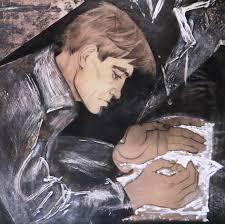
Stus’s concept of the poet, closely tied to his awareness of his own talent and to his reflection on his vocation, begins to take shape in the poetry of the early collections (up to 1972) and reaches its full articulation in the collection Time of Creativity (Čas tvorčosti). This concept contains elements of the neo-romantic image of the poet (or artist). The poems of the early period reveal a number of images associated with the figure of the poet: the poet-dreamer; the poet-medium between nature and the human being; the poet as the chosen one; the night as the time of creation; the opposition between the poet and the crowd; the conflict between the poet and the world, and between the poet and the epoch. Closely linked to the figure of the poet are the concepts of inspiration, sincerity, the word, and fate. The concept of inspiration, for instance, is realized through the image of a dove, and in the poems of the last two collections becomes associated with solitude, silence, calm, and darkness.
In Stus’s lyric poetry, the embodiment of the poet also acquires iconic features, in which the symbolism of palms, prayer, the heart, the pen, and letters appears—symbols connected to the understanding of creativity as a sacred act. This is why Rilke’s words seemed so close to Stus: “it is not the poet who writes: something writes through the poet” [22, 238].
Stus’s concept of the poet is not univocal; rather, it emerges from a system of antinomies: the “ready-made,” rhetorical word of culture versus the poet’s new word; the poet-tribune/prophet in the vulgar sense versus the poet-medium; the poet-publicist versus the poet-intellectual.
References
1. Stus V.S. Works in Four Volumes (Six Books). With additional Volumes 5 and 6 (in two books). Lviv: Prosvita, 1994–1999.
2. Stus V. Two Words to the Reader, vol. 1, book 1, p. 42.
3. Manuscript Department and Textology Section, Shevchenko Institute of Literature, NAS of Ukraine. Vasyl Stus Collection №170, file 995, fol. 38v.
4. Stus V. Time of Creativity / Dichtenszeit, vol. 2.
5. File 1158, fol. 1.
6. Stus V. Let Us Be Sincere, vol. 4, pp. 173–190.
7. Ibid.
8. Stus V. Letter to His Family of 15 January 1984, vol. 6, book 1, pp. 452–457.
9. File 1166, fol. 13.
10. File 1140, fol. 12.
11. File 1189, fol. 3.
12. Ibid.
13. File 1166, fol. 15.
14. Ibid.
15. See, e.g., Stus V. At the Poetry Tournament, vol. 4, p. 166.
16. File 1206, fol. 2.
17. File 1202, fol. 2.
18. Ibid.
19. File 995, fol. 39.
20. Stus V. The Phenomenon of the Epoch (The Ascent to the Golgotha of Glory), vol. 4, pp. 259–346.
21. Stus V. Fleeting Blossoming, vol. 4, pp. 346–361.
22. Stus V. Rainer Maria Rilke, vol. 4, pp. 238–239.